Repair, rebuild or add fieldstone walls that look like they’ve always been there. Free on-site estimates.
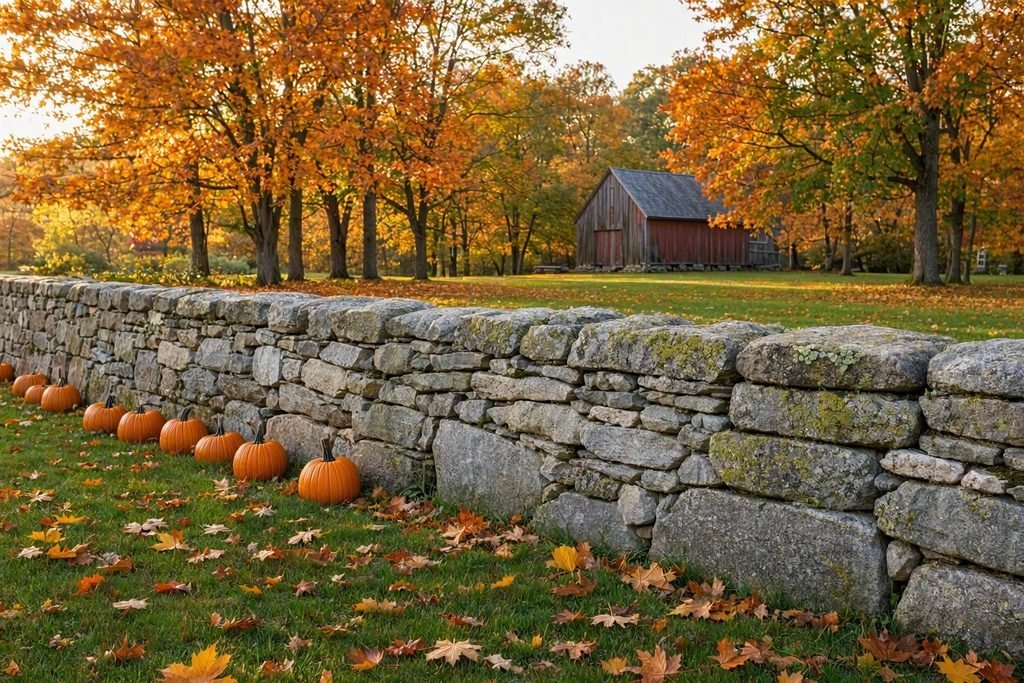
Litchfield County’s stone walls
Few places have as many old stone walls as Litchfield County. Most were built by farmers clearing fields in the 1700s and 1800s, and many are still standing along roads, property lines and old pastures. They’re part of what makes the area look the way it does, and a well-kept wall adds real character and value to a property.
Time, frost, tree roots and snowplows all take a toll. Stones fall out, sections lean or collapse, and roots push walls apart. The good news is that most old walls can be repaired or rebuilt using the original stone, so the result still looks old.
Stone wall services
Stone wall repair
Fixing a fallen or leaning section, resetting loose top stones, and rebuilding gaps left by trees or plows. Repairs reuse your existing stone wherever possible so the patch blends in.
Rebuilding old walls
When a long run of wall has slumped or been pushed over, the best fix is often to take it down and rebuild it on a firm footing. Your contractor will sort the stone, set a proper base, and relay the wall with the same look it had before.
New fieldstone walls
New walls along a driveway, property line, or garden, built with local fieldstone or reclaimed stone so they match the walls already on your land.
Stone retaining walls
Where a wall needs to hold back soil, it has to be built differently, with a deeper footing, drainage stone and often a batter (a slight lean back into the hill). See our retaining walls page for more.
Wall caps, pillars and entry walls
Flat capstones, stone pillars at a driveway entrance, and short decorative walls around a patio or garden.
Dry-laid or mortared?
Dry-laid walls are stacked without mortar, the traditional New England way. They flex with frost instead of cracking and are easy to repair one stone at a time. Most farm walls in the county are dry-laid.
Mortared walls are set in concrete and have a cleaner, more formal look. They need a footing below the frost line, or they will crack as the ground moves. They suit entry walls, pillars and formal gardens.
Your contractor will help you choose based on the look you want, where the wall is, and your budget.
What affects the cost
- Length and height of the wall
- Repair or new build. Resetting a few stones costs far less than rebuilding a whole run.
- Stone supply. Reusing your own stone is cheapest. Buying matched fieldstone or reclaimed wall stone adds cost.
- Dry-laid or mortared. Mortared walls need a concrete footing.
- Access. Walls deep in the woods or on steep ground take longer to reach with equipment.
A short repair can be a one or two day job. A long new wall can take a few weeks. A free on-site visit is the only way to get a real price.
Stone wall FAQ
Can an old stone wall be repaired instead of replaced?
Usually, yes. Most fallen sections can be rebuilt with the original stone, and that’s what keeps the wall looking authentic.
Who owns a stone wall on a property line?
It depends on your deed and survey. If a wall sits on a boundary, check with your neighbor before major work. Your contractor can work with both owners.
Is it legal to take stone from an old wall?
Only with the landowner’s permission. Some towns also protect walls along scenic or historic roads, so check with your town before removing or moving a roadside wall.
When is the best time to repair a stone wall?
Spring through late fall, when the ground isn’t frozen. Late fall is a good time to fix damage before winter makes it worse.
Do you work outside Torrington?
Yes, throughout Litchfield County, including New Milford, Litchfield, Washington, Kent, Goshen, Winsted and nearby towns. See our service area.
Get a free stone wall estimate
Call or send the form, and a local stone wall contractor will come look at your wall.