Custom paver and stone patios built on a deep, compacted base so they stay flat through every Connecticut winter.
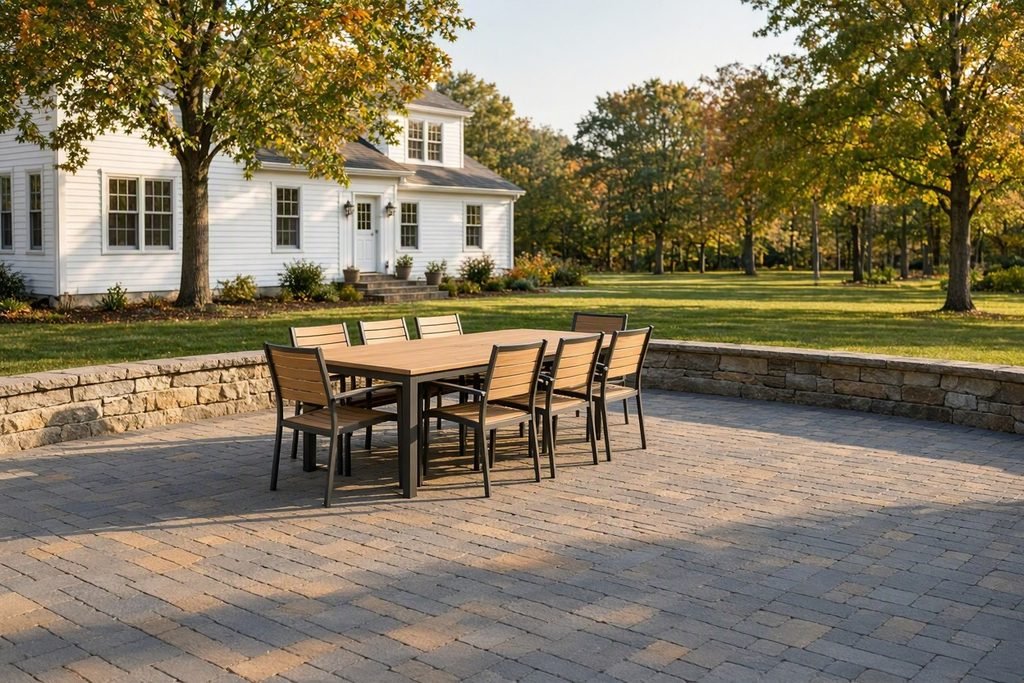
Patio materials
Concrete pavers
A popular, versatile choice for Litchfield County homeowners. Pavers come in hundreds of shapes, colors, and textures, from classic brick looks to large-format slabs that mimic natural stone. Because each paver is separate, the surface flexes slightly with freeze-thaw instead of cracking.
Bluestone
A Northeast classic. Bluestone can be laid in a clean rectangular pattern for a formal look, or as irregular flagstone for something more natural. It’s a premium material that suits the county’s antique colonials, farmhouses, and country estates.
Natural fieldstone and flagstone
Irregular stone with natural texture and color variation. Great for garden patios and informal spaces.
Permeable pavers
Designed with wider joints filled with gravel so rainwater drains through instead of running off. A smart option where drainage is a concern.
Designing your patio
- Size it for how you’ll use it. A table for six with room to walk around it needs more space than most people expect. Plan for furniture first, then draw the outline.
- Think about flow. Connect the patio to your back door, grill area, and yard with walkways or steps.
- Consider sun and privacy. Placement relative to the sun and neighbors makes a big difference in how often you use the space.
- Plan upgrades now. Seat walls, fire pits, lighting, and gas lines for a grill are easier to build in from the start.
How a patio is built
- Layout and utility locate
- Excavation of sod and topsoil to the proper depth
- Geotextile fabric where soil conditions call for it
- Gravel base placed and compacted in lifts
- Screeded bedding layer
- Pavers or stone laid to pattern, cut to fit, pitched for drainage
- Edge restraint installed
- Joints filled with polymeric sand and compacted
Patio cost in Litchfield County
Paver patios commonly run roughly $15 to $30 or more per square foot installed, and natural stone generally costs more. Larger patios usually cost less per square foot. Site access, slope, the need for steps or walls, and design complexity all affect the total.
Patio FAQ
Do pavers get weeds?
Properly installed polymeric sand greatly reduces weeds and ant hills. An occasional top-up keeps joints tight.
Can you put a patio over my old concrete slab?
Sometimes. If the slab is sound and the heights work with your doors, an overlay is possible. Cracked or heaved slabs are usually removed.
Should I seal my pavers?
Sealing is optional. It can deepen color and make cleaning easier, and many homeowners reseal every few years.
How soon can I use my patio?
Usually right away once the joint sand is set, typically within a day or two.
Start planning your patio
Call or send the form for a free patio design consultation.